
Shorei-Ryu is an Okinawa style heavily influenced by the traditional Naha-te style developed by Kanryo Higashionna in the 19th century. Nonetheless, Shorei-Ryu has deep stemming influences as far back as the Sho dynasty in 1400 when weapons were prohibited in Okinawa. It was brought to the United States in 1946 by Robert A. Trias after training with Tung Gee Sing and Hoy Yuan Ping. Click here to read a more in depth analysis of Shorei-Ryu history.
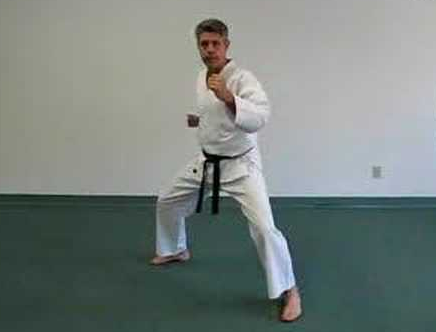
Shorei-Ryu is a unique style in its incorporation of low stances, strong techniques, and its basis in the five traditional animal strengths. The theory and traditional training methods are based on the five animal strengths including dragon, tiger, snake, crane, and leopard. Shorei stylists look upon the unique characteristics of each animal to uncover personal strengths and techniques with which to unleash them. With each animal comes a unique mentality and form of execution. The dragon represents body strength and one’s ability to endure bodily attacks. Most dragon style techniques are circular and powerful; they are practiced with relaxed breathing and only at the point of focus does the practitioner’s breath become sharp. The dragon philosophy is associated with spirit of life and fight. The tiger represents the strength of the skeletal system and its ability to carry internal energy to the surface where it manifests itself into external power. Tiger techniques are short range yet violent and are empowered by forced abdominal breath. The snake represents the conscious mental component of combat as the snake style reinforces patience, precision, and astuteness. Snake techniques are fluid and accurate relying on proper preparation for a successful execution. The crane represents the partnership between mental and physical balance to develop self-confidence and proficiency. Crane techniques involve alternating jabbing and spearing which require exceptional speed and a high level of concentration. The leopard represents the balance between mental (inner) strength and physical (outer) strength. Thus, the leopard repertoire incorporates a balance of hard and soft techniques. The leopard philosophy draws upon the interplay between internal and external energies facilitated by practiced breath. It enables a practitioner to fuse inner and outer strength to enhance one’s combat style. The five animal philosophies are incorporated in the practice of Shorei as seen in stances, techniques, and kata.
Most Shorei stances are practiced low to enhance technique execution and energy flow. The incorporation of low stances in the Shorei system such as the fundamental kiba dachi (horse stance) helps develop a subconscious inclination towards executing techniques from a low center of gravity. Furthermore, the practitioner develops internal power from many hours of low stance practice1. By managing chi kara (internal power), the flow path of physical power is cleared. As a result, intense physical power can be summoned at a given instance by a Shorei stylist. While training, the Shorei stylist practices several traditional exercises from a low kiba dachi including karate 5-count, outward chops from the neck, and Okinawa punch to the groin. Practicing traditional exercises from a low stance is the essential component of actualizing the management of chi kara. By commonly associating low stances with basic technique, the integration of technique execution and energy management becomes second nature to the practitioner. Low stances are integrated throughout the Shorei-ryu system and its repertoire of techniques.
Four major Shorei kata techniques that develop form, power, speed, and focus when practiced consistently include omoto kata, taezu naru waza, ippon kumite kata, and kihon kumite kata. The omoto kata series consists of 10 forms all starting and ending from a tegatana sieken uke. This series of techniques are predominantly block-strike sequences done from four low zenkutsu dachi (forward stances). The lack of complexity in these techniques allows the practitioner to focus on the development of power, form, and breathing technique. The monotony of the each omoto kata forces the development of power through stances and breathing technique to be the focal point of the kata. Furthermore, the relative simplicity of the techniques highlights the importance of executing a series of techniques from a low stance because these simple techniques are only effective when preformed powerfully from a low stance. Thus, omoto kata are important tools that are incorporated in kyu training especially at the intermediate level. Other techniques like taezu naru waza develop a practitioners speed and fluidity.
The 11 continuous sparring forms, taezu naru waza, usually forgo the intricacies of traditional form to develop a sense of fluidity and speed. For the intermediate stylist each taezu naru waza is to be effectively executed under 3 seconds. To practice the technique and the flow of energy, the stylist performs the taezu naru waza slowly and carefully. Gradually, the speed of execution is increased and practitioner modifies the style of execution to fit his/her liking. For example, a stylist may find it easier to execute a block and strike simultaneously while another stylist may find it easier to execute a block and strike sequentially because body momentum can be shifted differently. These personal modifications are necessary to develop speed and fluidity in execution. In this manner, a Shorei stylist gains personal insight on one’s muscle reaction to the Shorei-ryu system. Nonetheless, the form and technique of taezu naru waza is always taught and passed on consistently. When performed under 3 seconds, these techniques can undercover a practitioner’s fighting style because the technique is performed at speeds that are practical in combat. Furthermore, practicing techniques at increased speeds enforces execution without thought, the mushin philosophy of “no mind.” Thus, taezu naru waza are essential tools in understanding self while developing speed, fluidity, and effectiveness. The unifying technique between omoto kata and taezu naru waza are ippon kumite kata.
With a total of 27 series of techniques, the ippon kumite kata simulate defensive battles against one opponent to develop a practitioners sense of balance and fluidity between form, power, and speed. By incorporating a vast group of blocks, strikes, and kicks, the nature and application of each technique is revealed in short and memorable situations. Thus, the practitioner can focus on developing the execution of a particular block, strike technique by perfecting a single ippon kumite kata. Furthermore, the techniques instill the virtue of using karate only when necessary; every ippon kumite kata begins and ends with a block. Thus, the student is never the attacker but merely a defender. These techniques are excellent building blocks and introductions to the basic sparring techniques. When a practitioner becomes proficient in ippon kumite kata execution, it is essential to practice a more advance form of these techniques-execution in all four directions. The advance practice of the ippon kumite kata demands that the karate-ka execute the ippon kumite kata in its normal form and in its mirrored form. Thus, all techniques performed with the right side of the body are performed on the left side in the mirrored form. Furthermore, the practitioner executes a form of the ippon kumite kata in a different direction. For example, the normal form is performed facing north then the practitioner turns and performs the mirrored form facing south. The advance practice of the ippon kumite kata highlight two important physical philosophies of Shorei-ryu: developing competency and balance on both sides of the body and perfecting weight shifting by keeping one’s center of mass over a sturdy base. These philosophies are essential building blocks in developing proper form and a powerful execution. All told, ippon kumite kata prepare a practitioner for a longer, more involved set of techniques—formal kata.
Being the basic form of knowledge retention and transmission, formal kata incorporates all the principles of Shorei-ryu karate in a series of techniques with the ultimate goal of elevating a practitioner to self-enlightenment and understanding. The Shorei-ryu system encompasses many kata, some of which are borrowed from other traditional styles. These kata include but not limited to: Taikyoku, Juni-ippon, Gakeisei, Wansu, Saifa, O’Naihanchi, Buto, Gopei Sho, Bassaidai, Seiunchin, Seipai, Dan Enn Sho, Tensho, Anaku, Rohai, Kanku Sho, and Suparunpai. The kata are usually learned in stages which mirror a practitioner’s development in the style. Firstly, one learns the physical movements incorporating the fundamentals such as speed, power, form, breathing patterns, and timing. The first stage of learning is intense as the karate-ka must conform body movements and tendencies to the proper technique of the kata. However, the kata also conforms to the unique tendencies of the karate-ka’s body. This relationship between student and kata is a two-way street. By practicing a kata, a stylist molds the kata to fit his/her personality yet the kata also influence his/her self-awareness, strength, and technique. The ultimate goal of the first stage in kata practice is to perform a kata without thought, which is achieved through intense practice and ownership. The second stage in kata practicing is a deeper understanding of the kata’s interpretation and application. Every kata tells the story of a battle between an individual several attackers. Similar to several forms of expression and art, kata is subject to interpretation of the story it recounts. The physical interpretation of a kata is the precluding element to the successful application of kata techniques; the successful application of a technique is based upon a clear interpretation. Application of these techniques can be slightly different from the kata’s interpretation because not every real life situation will occur as it did in a kata. Furthermore, not every karate-ka will react in the same fashion as the defender in the kata did. The interpretation of a kata presents a certain situation while the application of the technique will usually be successful in a multitude of situations. Thus, understanding bunkai (interpretation of the kata), can build one’s repertoire of techniques while developing a greater sense of ownership and proficiency in the kata. The first two stages build the third stage of kata practice—reaching deep understanding and enlightenment. While practicing kata, one develops self-confidence in ability and technique as the kata can be performed without thought but through reflexes with an understanding of application. However, these benefits that come with the first two stages of practice are achieved through intense repetition. It is through this intense repetition that the third stage of understanding takes precedence. Through intense repetition a karate-ka is forced to confront self-limitations. The successful practitioner ultimately transcends these barriers and realizes that one has conquered only enemy—oneself. This self-realization develops discipline and mental fortitude by highlighting strengths and weaknesses. Self-realization is just one of the many types of deeper understandings one gains while practicing kata. Another philosophy stems from the Chinese practice of Chan Buddhism in the Shaolin Temple. Kata was practiced as a form of meditation to gain wisdom. The ultimate belief behind this philosophy was to gain control of the situations that may develop in life and act with skill and prudence to avoid undesirable actions in these situations (according to Mike Galose of the Goju-Ryu Karate-Do International). The three stages of kata practice are not sequential but rather occur in tandem through time and practice. Thus, kata practice never ends as a deeper sense of understanding and enlightenment can always be reached. In this sense, karate has no end. Rather, it continues to build mental and physical fortitude while developing strong morals of peace, enlightenment, and understanding.